

 English
 русский
 Español
Content
How much longer does a brushless angle grinder run compared to a brushed model on the same battery?
Runtime difference depends on workload, but consistent patterns emerge from comparative tests. A brushless grinder typically completes 30% to 50% more cutting or grinding operations than a brushed grinder using the same battery capacity.
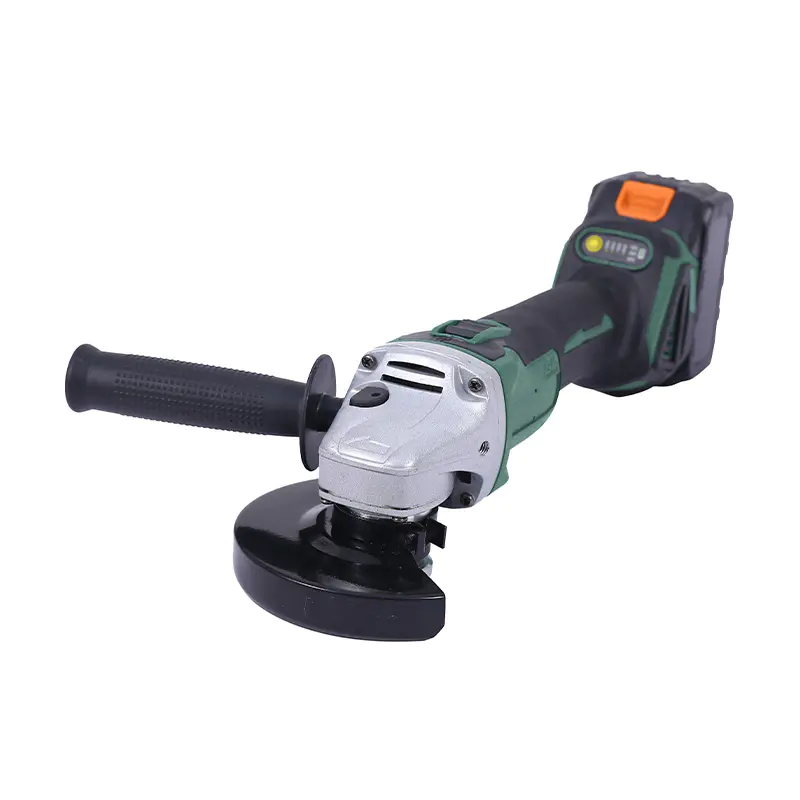
Key factors affecting the runtime difference:
- Light grinding (surface cleaning, weld blending): Brushless models show 40–50% longer runtime because the motor operates in its mid-range efficiency zone (70–80% of maximum speed)
- Heavy cutting (rebar, 5 mm steel plate): Runtime advantage drops to 25–35% because high current draw (25–35 amperes) reduces the efficiency gap between motor types
- Intermittent use (2-second cuts with 5-second pauses): Brushless efficiency advantage increases to 50–60% because the motor stops completely between cuts, eliminating idle power consumption
- Real-world example: A 5.0 Ah battery on a brushless 18V grinder cutting 10 mm steel rebar may complete 35 cuts of 1 cm diameter. The same battery on a brushed 18V grinder under identical conditions completes 22 to 25 cuts.
What safety features do brushless cordless angle grinders include that brushed models may lack?
Brushless designs incorporate electronic control boards that enable safety features not possible with simple brushed motor circuits.
- Kickback detection and shutdown: The control board monitors current draw and motor speed 50 to 100 times per second. If the wheel binds, causing a sudden speed drop of more than 30% within 0.05 seconds, the electronics cut power within 0.1 to 0.2 seconds. This response is faster than a user’s reflex time (typically 0.3–0.5 seconds). Brushed grinders lack this sensing capability and continue running until the user releases the trigger.
- Restart protection: If the battery is connected or the tool is plugged in while the trigger is locked in the ON position, brushless electronics prevent the motor from starting. The user must release and re-pull the trigger. This feature reduces the risk of the grinder running unexpectedly when installing a fresh battery.
- Electronic brake: Brushless grinders stop the wheel within 1 to 2 seconds after trigger release, compared to 5 to 10 seconds for brushed grinders without a brake. The brake works by reversing the motor’s electromagnetic field. Shorter stopping time reduces the chance of contact with the spinning wheel after the cut is complete.
- Overload and over-temperature protection: The control board reduces power output by 20% to 40% when internal temperature exceeds 80°C. If temperature reaches 95°C, the tool shuts down completely until cooled. Brushed grinders rely on thermal fuses or user judgment, which may allow prolonged operation at damaging temperatures.
Are brushless cordless angle grinders more expensive to maintain or repair than brushed models?
Initial purchase cost
A brushless cordless angle grinder (tool only) costs $100 to $200, depending on brand and voltage platform (18V to 40V). A comparable brushed cordless grinder costs $50 to $100. The brushless premium ranges from 50% to 100% higher.
Repair considerations
- Motor failure: Brushless motor windings rarely fail under normal use. When failure occurs (typically due to moisture ingress or extreme overheating), the entire motor assembly—including the control board—requires replacement. A brushless motor assembly costs $40 to $80. A brushed motor assembly costs $15 to $30, and replacement brushes cost $5 to $10.
- Control board failure: The electronic control board is the most common failure point in brushless grinders, particularly after exposure to conductive metal dust. Board replacement costs $25 to $60. Brushed grinders have no control board; the trigger switch ($10–$20) is the primary electronic component.
- Gearbox and bearings: Both brushless and brushed grinders share similar gearbox designs. Gear replacement costs ($15–$30) and bearing replacement costs ($5–$15) are similar between the two types.