

 English
 русский
 Español
A brushless cordless angle grinder is a widely used tool in metalworking, construction, fabrication, and maintenance tasks. It offers cutting, grinding, polishing, and surface preparation functions without the limitations of a power cord. The adoption of brushless motor technology has further improved its performance and reliability. To better understand the features of a brushless cordless angle grinder, it is helpful to examine four key aspects: motor technology, power and efficiency, user convenience, and safety features.
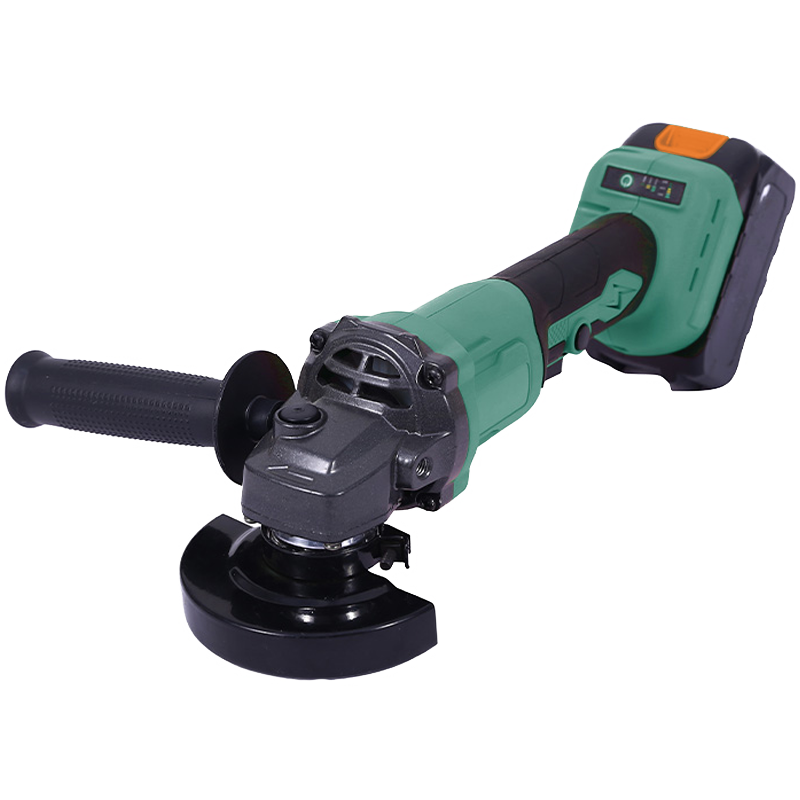
Brushless Motor Technology
The defining feature of a brushless cordless angle grinder is its motor design. Traditional brushed motors rely on carbon brushes to transfer power, which creates friction and gradual wear. In contrast, a brushless motor removes the need for these brushes, using electronic control systems to manage the motor's rotation.
This design offers several practical advantages. With less friction inside the motor, brushless grinders generally produce reduced heat, which helps extend the motor's lifespan. The elimination of brushes also means less maintenance, as users do not need to replace worn components. Additionally, the electronic control system in a brushless motor can adjust performance based on load, providing more consistent operation when cutting or grinding through tougher materials. This technology allows the grinder to maintain steady speed and torque, which is useful for precision and durability in demanding tasks.
Power Delivery and Efficiency
Another important characteristic of a brushless cordless angle grinder is its efficient power delivery. Cordless tools rely on rechargeable batteries, and brushless technology helps maximize battery utilization. Since the motor does not lose energy to friction from brushes, more of the battery's power is converted into usable output. This can result in longer runtime, allowing users to work for extended periods without needing frequent recharging.
The power delivery of brushless grinders is also more stable. When cutting or grinding dense materials, the motor can adjust output to maintain performance. This controlled use of energy helps reduce strain on both the tool and the battery. Many brushless cordless angle grinders are equipped with advanced battery systems that include protection against overloading, overheating, and excessive discharge. These systems help preserve battery life and maintain consistent operation across various tasks.
Overall, the combination of brushless motors and modern battery technology contributes to efficient energy use, stable performance, and reliable power for different applications.
User Convenience and Portability
Brushless cordless angle grinders are designed with user convenience in mind. The cordless structure eliminates the need for power outlets and extension cords, offering greater flexibility in where and how the tool can be used. This is particularly helpful in construction sites, outdoor environments, or situations where mobility is important.
Many models are relatively lightweight compared to older corded versions. Although weight differs across designs and battery sizes, manufacturers often aim to create tools that balance power and comfort. Improved ergonomics, such as molded grips, balanced motor placement, and adjustable handles, further enhance ease of use.
Cordless grinders also support quick accessory changes, often through tool-free mechanisms such as quick-release nuts or adjustable guards. These features allow users to switch between discs, adjust angles, or reposition the guard without additional tools, which improves efficiency during multi-step tasks.
Together, portability, ergonomic design, and simplified operation make brushless cordless angle grinders practical for both professional and home users who value flexibility and ease of movement.
Safety and Control Features
Modern brushless cordless angle grinders incorporate multiple safety features to support controlled operation. Electronic braking systems are commonly included, allowing the disc to stop rotating more quickly after the trigger is released. This reduces the risk of accidents during repositioning or setting the tool down.
Many models also have soft-start functions, which gently ramp up motor speed when the tool is activated. This helps prevent sudden torque reactions, making the tool easier to manage, especially when working in tight areas. Overload protection is another common feature, automatically reducing output or shutting down the tool if it encounters conditions that could cause damage.
In addition, adjustable guards help shield users from sparks and debris, and auxiliary handles provide better stability for two-handed gripping. The combination of these safety elements supports controlled operation and reduces the likelihood of injuries or tool damage.