

 English
 русский
 Español
Brushless cordless angle grinders offer notable advantages, but they also present several drawbacks. One of the primary limitations is battery dependence. Since these tools rely on battery power, their performance is directly tied to battery capacity, charge level, and battery health. In continuous or heavy-duty work, battery depletion can interrupt workflow, requiring spare batteries or frequent recharging.
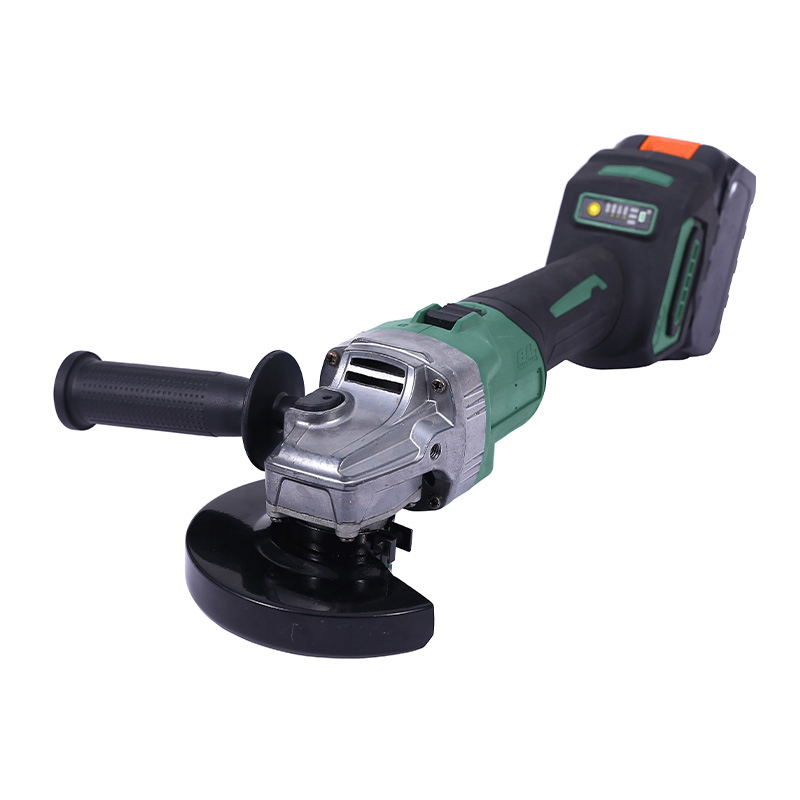
Another drawback is cost. Brushless motors and high-capacity lithium-ion batteries typically increase the upfront price compared to brushed or corded models. While the total cost of ownership may be lower over time due to longer motor life, the initial investment can be higher for individuals or small businesses.
Additionally, brushless cordless angle grinders may have lower sustained power compared to corded grinders in high-demand tasks. While brushless motors are efficient, battery output may limit performance during extended heavy cutting or grinding operations. This can be especially relevant for thick metal or concrete work.
Noise and vibration are also concerns. Angle grinders naturally generate significant noise, and cordless models still require proper protective gear. Vibration over extended use can cause operator fatigue, so anti-vibration features and ergonomic design are important.
Brushless Cordless Angle Grinder: What Can We Know?
Understanding brushless cordless angle grinders involves recognizing their core features, limitations, and application suitability. The following points summarize essential knowledge:
Brushless motor technology
Brushless motors use electronic commutation instead of physical brushes. This results in higher efficiency, reduced heat generation, and longer motor life. Brushless grinders often deliver better performance in short bursts and more consistent output under load.
Battery and power management
The tool's performance depends on battery voltage and capacity. Higher voltage batteries (e.g., 18V or 20V) generally provide more power and better performance. Battery management systems (BMS) help protect against over-discharge, overheating, and overcurrent.
Speed control and torque
Many brushless grinders include variable speed settings, allowing users to adjust RPM for different materials and tasks. Torque control and electronic protection features can improve safety and extend tool life.
Portability and convenience
Cordless grinders offer greater mobility and flexibility, especially in remote or outdoor environments. They eliminate the need for power cords, reducing trip hazards and improving ease of use.
Tool compatibility and accessories
Angle grinders can use various discs for cutting, grinding, sanding, and polishing. Users must select discs compatible with the grinder's RPM rating and disc size to ensure safety and performance.
Safety features
Common safety features include electronic braking, soft start, and overload protection. Proper PPE (gloves, eye protection, hearing protection) is essential due to sparks, debris, and noise.