

 English
 русский
 Español
Content
- 1 1. Verify the Sample Against the Product Specification
- 2 2. Test Torque, Speed, and Drilling Performance
- 3 3. Examine Chuck Stability and Mechanical Assembly
- 4 4. Evaluate Battery and Charger Compatibility
- 5 5. Check Temperature, Vibration, and Repeatability
- 6 6. Confirm That Production Quality Can Match the Approved Sample
- 7 7. Prepare a Clear Sample Approval Checklist
- 8 Approve Evidence, Not Just Appearance
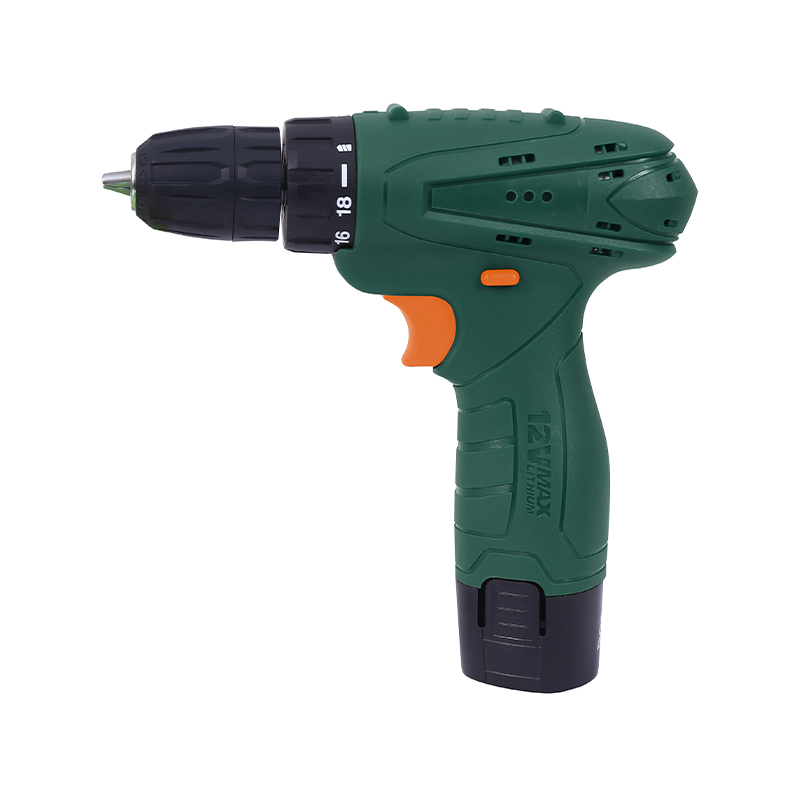
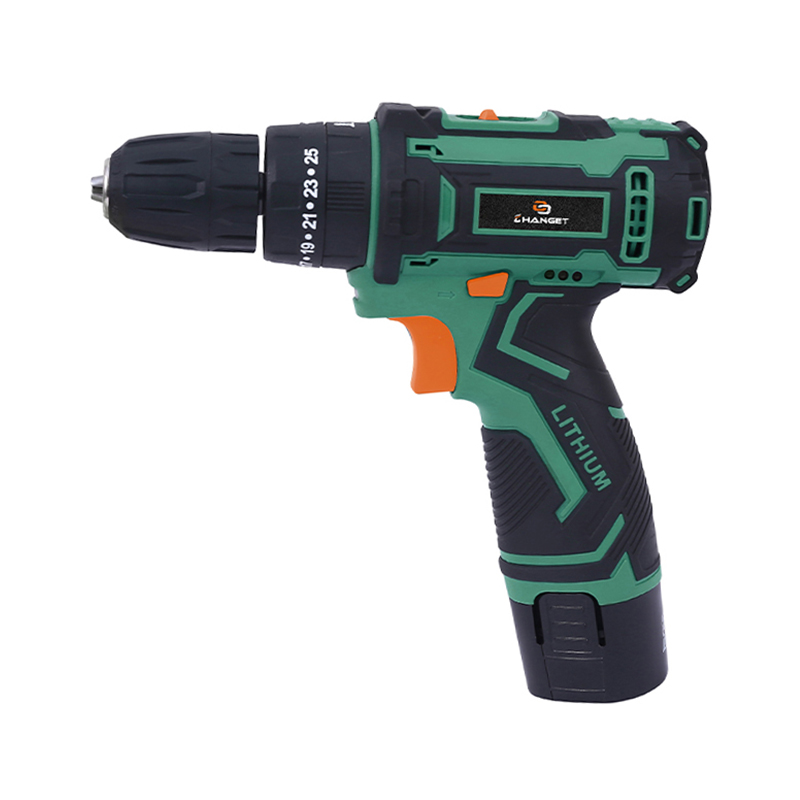
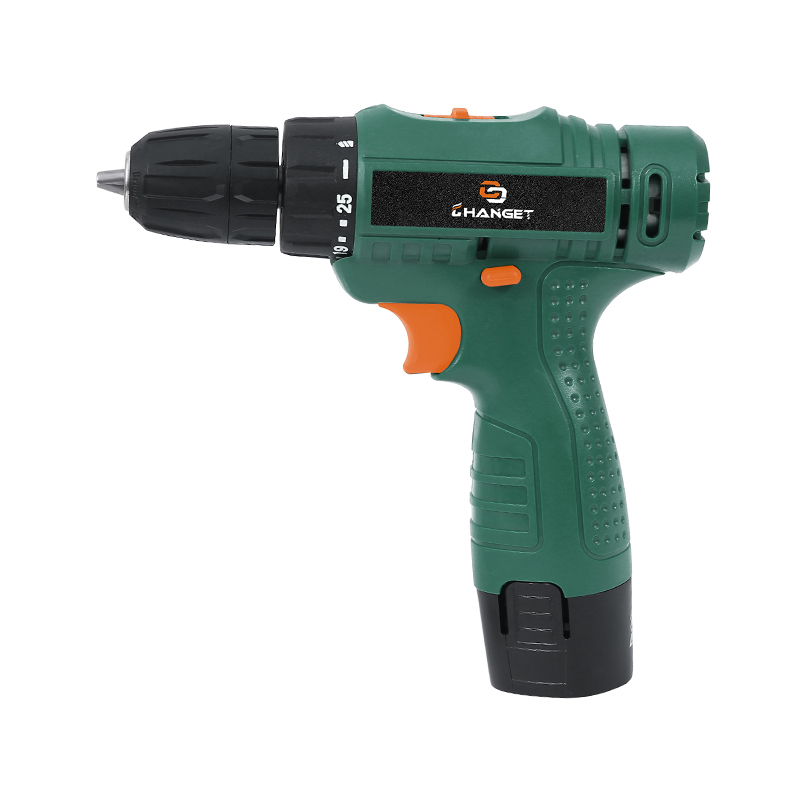
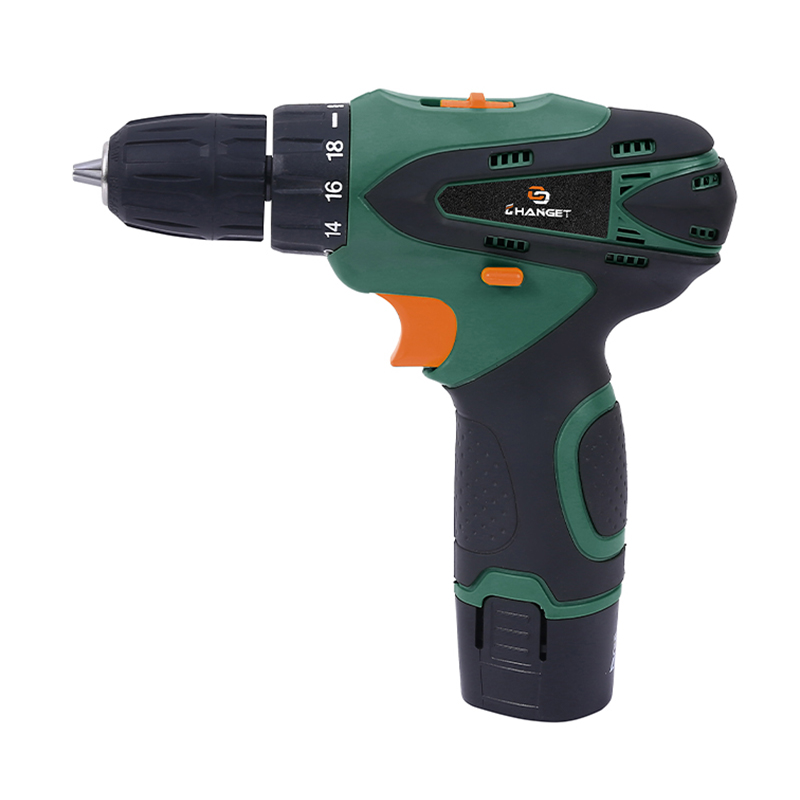
A cordless drill may run smoothly during a short demonstration but behave differently after repeated drilling, screwdriving, or battery charging. For importers, distributors, and private-label brands, approving a sample requires more than checking whether the tool switches on. A structured evaluation helps determine whether the product matches its specifications and is suitable for the intended market.
At Chenge, we encourage buyers to establish clear acceptance criteria before placing a production order. Businesses comparing cordless drill manufacturers should assess mechanical performance, battery compatibility, operating controls, product consistency, and documentation as part of the same review.
1. Verify the Sample Against the Product Specification
Begin by comparing the received sample with the approved quotation, technical datasheet, and purchase requirements. Small configuration differences can affect product performance and customer expectations.
- Model identification: Check the model number, voltage rating, serial or batch identification, and product label.
- Included accessories: Confirm the number of batteries, charger, drill bits, carrying case, and other items listed in the order.
- Housing quality: Inspect for cracks, loose components, uneven assembly gaps, and visible damage.
- Documentation: Review the user manual, safety warnings, warranty information, and required market-specific documents.
Record the approved sample's configuration with photographs and a dated inspection sheet. This creates a reference for comparing subsequent samples and production shipments.
2. Test Torque, Speed, and Drilling Performance
Torque and rotational speed influence how a drill performs across different materials and applications. Buyers should verify these characteristics against the agreed specifications rather than relying on a product description alone.
Recommended Functional Tests
- Torque settings: Check whether the clutch settings operate consistently and whether the drill can complete the agreed screwdriving task.
- No-load speed: Measure rotational speed with suitable equipment and compare the result with the specified range.
- Variable-speed trigger: Check whether speed responds progressively to trigger pressure.
- Forward and reverse: Confirm that both directions operate correctly and the selector engages as described in the manual.
- Performance under load: Test drilling or fastening in a defined material using an agreed bit, operating mode, and battery configuration.
For a fair comparison, use the same test material, accessory, battery charge condition, and operating procedure for every sample. A drill's numbered clutch positions are not standardized torque measurements, so critical torque requirements may need dedicated test equipment.
3. Examine Chuck Stability and Mechanical Assembly
The chuck holds the drill bit in position, making its condition important for drilling accuracy and safe operation. A loose or poorly aligned chuck can affect the finished hole and the user's experience.
Buyers should check the following points:
- Confirm that the chuck grips suitable accessories securely according to the manufacturer's instructions.
- Inspect the jaws for visible damage and uneven movement.
- Check for unusual vibration, abnormal noise, or looseness during operation.
- Measure chuck runout with an appropriate fixture and instrument if the application requires a defined accuracy level.
- Inspect the gearbox selector, mode ring, and other mechanical controls for reliable engagement.
Acceptance limits for chuck runout and vibration should be established according to the model specification and intended application. Buyers should avoid imposing arbitrary limits after testing has already begun.
4. Evaluate Battery and Charger Compatibility
Battery performance affects the drill's operating duration, available power, and charging arrangements. A compatible-looking battery does not automatically confirm that its electrical and mechanical specifications match the tool.
| Inspection Item | What Buyers Should Verify |
| Battery rating | Specified voltage, capacity in Ah, model number, and configuration |
| Battery connection | Secure attachment and reliable electrical contact |
| Runtime | Performance under a defined workload and operating procedure |
| Charger compatibility | Approved battery pairing, input rating, and regional plug requirements |
| Charging behavior | Normal indicator operation and absence of abnormal heating or damage |
| Documentation | Applicable battery safety and transportation documents |
Runtime tests should use a documented workload because drilling material, bit size, torque demand, battery capacity, and operating intervals can significantly change the result. Buyers importing lithium-ion battery products should also confirm the documentation required for their destination market and transport method.
5. Check Temperature, Vibration, and Repeatability
A brief demonstration may not reveal problems that appear during repeated use. A controlled test sequence helps buyers identify inconsistent operation or unusual temperature increases before approving a sample.
- Repeated operation: Run the agreed drilling or fastening sequence under specified conditions.
- Temperature monitoring: Record temperatures at designated points using a consistent procedure.
- Vibration and noise: Note unusual changes during operation and compare results with any agreed limits.
- Control response: Check trigger return, direction switching, and other required functions after the test sequence.
- Safety response: Stop testing if the tool exhibits unsafe behavior, visible damage, or abnormal overheating.
Test duration and workload should follow the product's operating instructions and the buyer's acceptance plan. A sample test is not a substitute for formal product safety certification or a complete endurance evaluation.
6. Confirm That Production Quality Can Match the Approved Sample
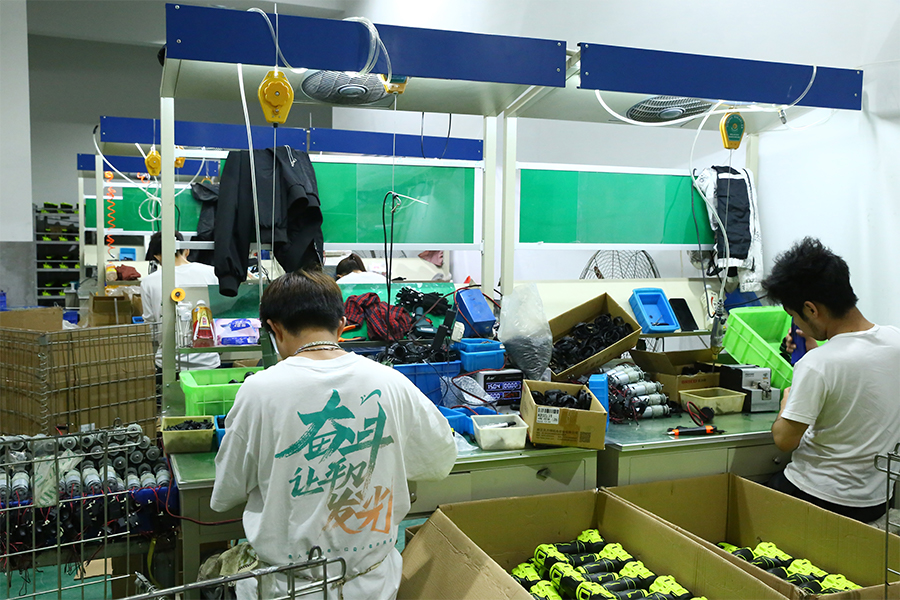
A sample that passes inspection demonstrates the performance of that particular unit. It does not independently prove that every drill in a future shipment will have the same characteristics. Buyers should review the manufacturer's quality control procedures alongside sample results.
At Chenge, we recommend discussing these production controls before approving a bulk order:
- Incoming inspection records for motors, batteries, chucks, switches, and other key components.
- Assembly checks covering gearbox operation, control response, and component fit.
- Finished-product testing against documented functional requirements.
- Battery and charger pairing checks before packing.
- Batch identification, defect handling, and corrective-action records.
For private-label projects, the approved reference should also record the housing color, logo placement, packaging artwork, accessories, and manual version. These details help reduce discrepancies between the sample and the delivered goods.
7. Prepare a Clear Sample Approval Checklist
Before confirming the order, buyers can use a simple approval record to summarize the evaluation.
| Check Category | Acceptance Evidence |
| Product identity | Model and configuration match the purchase specification |
| Mechanical performance | Torque, speed, chuck, and control checks recorded |
| Battery system | Battery compatibility and charging behavior verified |
| Repeated operation | Results documented under agreed test conditions |
| Quality documentation | Applicable inspection records and compliance documents reviewed |
| Packaging and accessories | Contents, labels, and artwork approved |
Approve Evidence, Not Just Appearance
Approving a cordless drill manufacturer should involve measurable performance checks, battery evaluation, mechanical inspection, and a review of production quality controls. Clear acceptance criteria also help both parties resolve discrepancies before a larger order is released.
At Chenge, we welcome discussions with distributors, importers, and OEM buyers about cordless drill specifications, sample evaluation, and product configuration. Visit cordless-drill.net to share your application requirements and discuss the testing and documentation needed for your purchasing project.