

 English
 русский
 Español
When did the High Torque Impact Wrench appear?
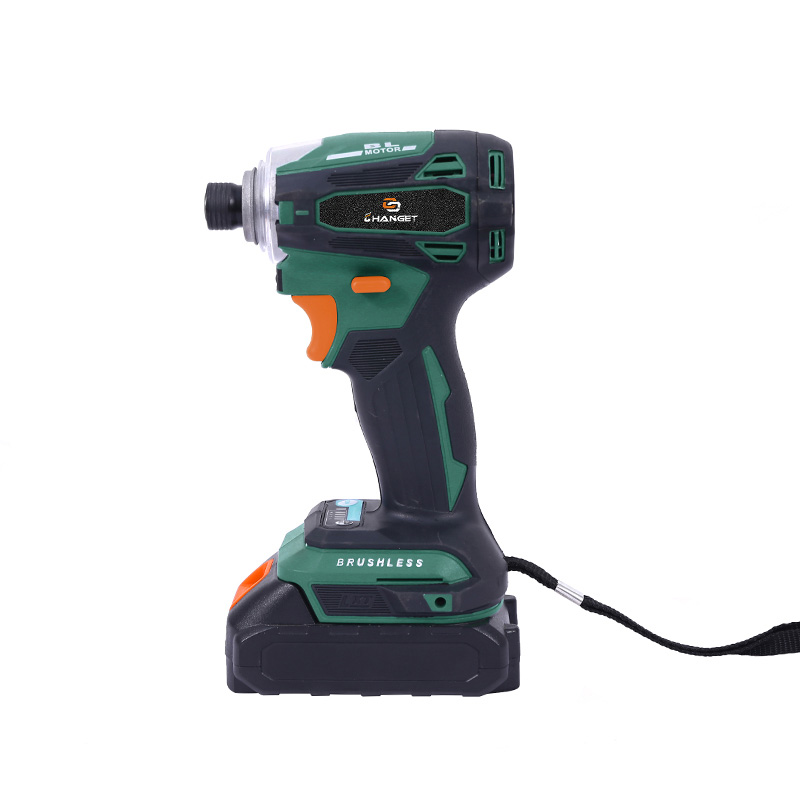
The development of the impact wrench is an evolutionary process, with key milestones bring about modern high-torque models.
Early Pneumatic Concepts (1920s-1930s): The foundational principle of the impact wrench was established in the 1920s. Inventors like Robert H. Pott (assigned to the Chicago Pneumatic Tool Company) patented early pneumatic impact tools. The 1934 patent by Ingersoll Rand for a "Reciprocating Hammer Tool" is often cited as a direct precursor to the modern impact mechanism.
Post-WWII Industrial Adoption (1950s): Following World War II, pneumatic impact wrenches became more common in automotive and industrial repair shops. These early models provided significantly more torque than manual tools but were limited by the technology of the time.
Evolution of High-Torque Models: The specific designation "high torque" emerged as a category as the tools evolved. The development of more powerful pneumatic motors, advanced hammer and anvil impact mechanisms, and specialized anvil designs (like the spline drive) allowed manufacturers to produce tools with progressively higher torque output, measured in hundreds and later thousands of foot-pounds (ft-lbs). This was an ongoing refinement from the 1960s onward.
Cordless High-Torque Era (1990s-Present): The advent of high-capacity nickel-cadmium, and later lithium-ion, batteries enabled the development of cordless high-torque impact wrenches. These tools brought high-torque capability to job sites without compressed air. The 21st century has seen continued refinement in brushless motor technology, electronic controls, and battery energy density, pushing the torque and runtime of cordless models closer to their pneumatic counterparts.
Why did the High Torque Impact Wrench appear?
The tool's invention and refinement were driven by practical demands in heavy mechanical work.
Overcoming Seized and High-Tension Fasteners
The primary driver was the need to efficiently manage large fasteners that were corroded, over-torqued, or designed with high clamp loads. Manual wrenches and bars were limited by human strength and leverage, often making tasks like removing tractor lug nuts or large hydraulic fittings laborious and dangerous. The impact wrench's hammering action delivers sudden, high-intensity torque pulses that can break a fastener's static friction (its "breakaway" torque) more effectively than a steady pull from a manual or standard power tool.
Improving Efficiency and Reducing Labor in Industry
In manufacturing, construction, and vehicle maintenance, time is a measurable cost. A high torque impact wrench allows a single operator to remove or install large bolts in seconds, rather than minutes of strenuous effort with a cheater bar. This dramatic increase in speed directly improved productivity in assembly lines, repair bays, and on construction sites where hundreds of large bolts might need to be tightened.
Enabling Work in Confined and Mobile Spaces
Many high-torque applications, such as on heavy equipment or steel frameworks, are not adjacent to stationary workbenches. The development of pneumatic and, later, cordless high-torque tools provided a portable solution. A technician could carry a single tool to a remote job site or into an engine compartment to apply the necessary force without the need for extensive leverage or immobile hydraulic equipment, expanding the range of feasible field repairs.
The Making of a High Torque Impact Wrench
Constructing a high torque impact wrench involves integrating a power source, a motor, an impact mechanism, and a durable housing.
The process begins with the power plant. In pneumatic models, this is a high-volume air motor with a rotor and vanes. In cordless models, it is a high-amperage DC motor, increasingly of a brushless design for efficiency and control. This motor provides the rotational power. The core of the tool is the impact mechanism, housed in a "hammer case." This contains a rotating hammer (or set of hammers) that is driven by the motor. Through a cam and spring system, the hammer engages with a mating anvil (which holds the socket). When resistance is met, the hammer cams out, rotates freely for a fraction of a revolution, and then is flung by its spring to deliver a high-energy impact to the anvil. This cycle repeats many times per second.
The anvil is a hardened steel component, often with a 1/2-inch, 3/4-inch, or 1-inch square drive designed to withstand the repeated impacts. All these internal components are housed in a forged aluminum or magnesium clamshell housing that must absorb vibration and resist damage from drops and impacts. For cordless tools, a sophisticated electronic control circuit manages battery power delivery, provides variable speed triggers, and includes protection from overloading. The components are assembled, lubricated with specialized grease, tested for torque output and function, and finally paired with a battery system (if cordless) before packaging.