

 English
 русский
 Español
Content
- 1 What Makes a Brushless Electric Impact Wrench Different from Other Power Tools?
- 2 How Does the Impact Mechanism Break Loose Seized Fasteners?
- 3 Where Do Stubborn Fastener Problems Typically Occur?
- 4 Brushless vs. Brushed vs. Pneumatic: A Performance Comparison
- 5 Selecting the Right Impact Wrench Configuration for Stubborn Fastener Work
- 6 How to Improve Results When Removing Corroded Fasteners
- 7 Why Procurement Teams Consider the Total Cost of Tool Ownership
- 8 Choosing a Supplier for Volume and Commercial Applications
Rusted lug nuts that have been on a vehicle through several winters. Seized bolts on machinery that has not been serviced in years. Fasteners tightened far beyond their specification by a previous technician with an air tool and no torque control. These situations share a common outcome when approached with a standard hand tool or a conventional drill: stripped heads, broken sockets, injured wrists, and time lost before the actual repair has even started. A Brushless Electric Impact Wrench is engineered specifically for this category of problem - not as a general fastening tool, but as a high-torque, high-impact power tool built to break loose fasteners that resist every other approach.
What Makes a Brushless Electric Impact Wrench Different from Other Power Tools?
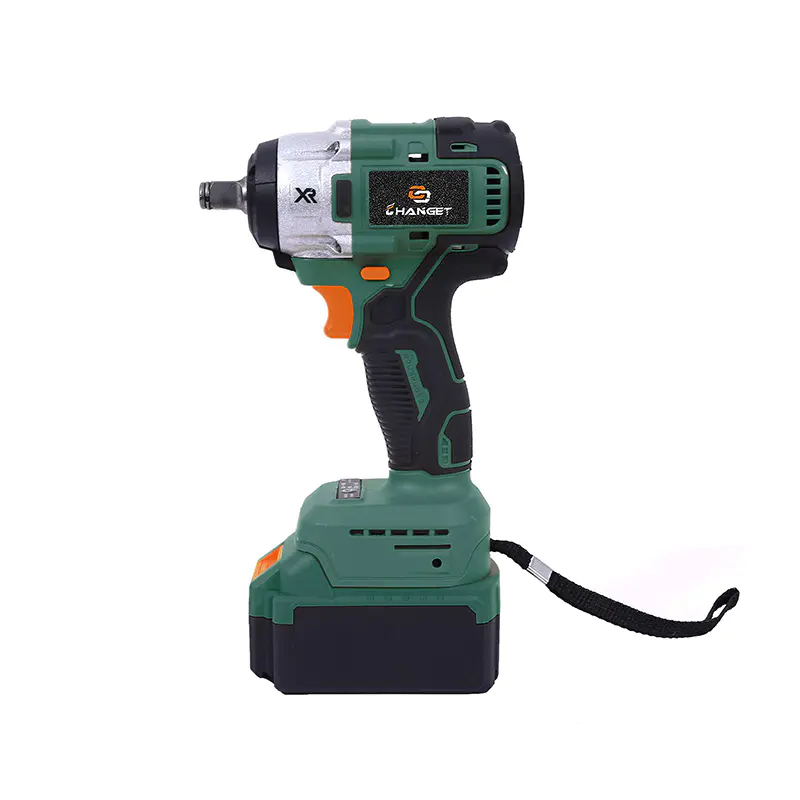
The Impact Mechanism and How It Generates Torque
An impact wrench does not apply torque the way a drill or a ratchet does. Rather than producing continuous rotational force, it delivers rapid, repeated bursts of high-torque impulses through a hammering mechanism inside the tool. This internal mechanism - typically a hammer and anvil assembly - spins freely until it engages the anvil, at which point it delivers a concentrated rotational impact before disengaging and spinning up again.
The practical effect is significant:
- Each impact delivers a peak torque far higher than the motor's continuous output would suggest
- The intermittent nature of the impact reduces the reactive torque felt at the operator's wrist
- The short duration of each impulse allows the fastener to respond to the force before it can transmit that force back through the socket and handle
- Rusted or seized fasteners that would require sustained force to break free often respond to the rapid shock loading of impact delivery
Why the Brushless Motor Changes the Performance Equation
In a brushed motor, physical carbon brushes make contact with a rotating commutator to deliver current to the motor windings. This contact creates friction, generates heat, limits efficiency, and causes progressive wear on both the brushes and the commutator. Brush replacement is a maintenance requirement, and brush wear degrades performance gradually before it causes outright failure.
A brushless motor eliminates this contact entirely. The commutation function is handled electronically, with sensors detecting rotor position and switching current to the appropriate windings without any physical contact between moving parts. The results are directly relevant to the tool's performance on stubborn fasteners:
- Higher energy conversion efficiency means more of the battery's capacity is delivered as usable torque rather than heat
- Lower internal heat generation allows the tool to sustain output under repeated heavy-load cycles
- The absence of brush wear means consistent performance across the full service life of the motor
- Lighter motor construction for a given power output improves maneuverability in confined working spaces
How Does the Impact Mechanism Break Loose Seized Fasteners?
The Physics of Shock Loading on Corroded Threads
When a fastener corrodes in place, rust and oxidation products form between the threads of the fastener and the threads of the receiving material. This corrosion layer bonds the surfaces together through a combination of mechanical interlocking and chemical adhesion. Sustained rotational force - the kind a breaker bar or a drill generates - compresses these corrosion products and can cause the fastener to strip or the receiving material to crack before the bond breaks.
An impact wrench applies force differently. Each impact pulse:
- Delivers a sharp rotational shock to the fastener head
- The shock propagates through the fastener body as a stress wave
- The corrosion layer at the thread interface responds to this shock loading by micro-fracturing
- Successive impacts progressively break down the corrosion bond across the thread surface
- Once the bond is sufficiently disrupted, the fastener rotates free
This shock loading approach is why impact tools succeed on fasteners that defeat sustained-force tools - the mechanism of attack is fundamentally different.
Torque Control and Its Role in Preventing Damage
Breaking a corroded fastener free requires high peak torque. But overtightening a replacement fastener, stripping a thread, or shearing a fastener head are equally costly problems. A Brushless Electric Impact Wrench with electronic torque control and adjustable settings allows the operator to match the tool's output to the task:
- Lower settings for fasteners in aluminum or softer materials where thread damage risk is high
- Higher settings for heavily corroded steel fasteners on automotive or industrial equipment
- Controlled final torque application when a fastener needs to be seated to a specific value
Electronic control enabled by the brushless motor platform allows speed and torque curves to be managed in ways that were not practical with brushed motor designs.
Where Do Stubborn Fastener Problems Typically Occur?
Automotive Maintenance and Repair
The automotive service environment generates a concentrated range of stubborn fastener problems in professional tool use:
- Wheel lug nuts: exposed to road salt, moisture, and the galvanic interaction between steel fasteners and aluminum wheels
- Suspension components: caliper bolts, control arm bolts, and strut mounts that see corrosive road exposure and high clamping loads
- Exhaust system fasteners: operating at elevated temperatures that cause thread oxidation and seizing, making conventional removal extremely difficult
- Engine components: head bolts, manifold studs, and oil drain plugs that have been in place for extended periods under heat cycling
Each of these applications benefits from the impact mechanism's ability to break corrosion bonds without the sustained force that risks thread or fastener damage.
Industrial Machinery and Equipment Maintenance
Maintenance operations on industrial machinery face similar fastener challenges at a larger scale:
- Machinery that has been in continuous service for extended periods without scheduled fastener inspection
- Fasteners on outdoor equipment exposed to weather, moisture, and chemical environments
- High-torque fasteners on conveyor systems, processing equipment, and structural joints
- Bolted connections on equipment that has been subject to vibration, which can both over-tighten and corrode fasteners simultaneously
The cordless format of a Brushless Electric Impact Wrench is particularly relevant in industrial maintenance because it eliminates the need for air lines or extension cords in locations where machinery is installed in areas with limited service access.
Construction and Structural Applications
- Construction fastening work involves both installation and occasional removal:
- Lag bolts driven into treated lumber that have corroded at the contact surface
- Through-bolts on structural connections that have been in place through years of weather exposure
- Anchor bolts in concrete that resist removal due to both the fastener's installation torque and any corrosion at the anchor interface
- Scaffold fittings and temporary structure connections that may have been overtightened or left in place longer than intended
Brushless vs. Brushed vs. Pneumatic: A Performance Comparison
How the Three Drive Technologies Compare for Stubborn Fastener Work
| Factor | Brushless Electric | Brushed Electric | Pneumatic (Air) |
|---|---|---|---|
| Peak torque output | High – competitive with pneumatic across a wide range of applications | Moderate – lower power density limits peak output | High – traditional reference for impact torque |
| Power source | Battery – fully cordless | Battery or corded | Compressed air – requires compressor and hose |
| Motor maintenance | None – no brushes to replace | Periodic brush replacement required | Motor wear on vanes and seals |
| Heat under sustained use | Lower – brushless efficiency reduces heat generation | Higher – brush friction adds heat load | Moderate – air expansion provides cooling |
| Torque adjustability | Electronic control – precise and repeatable | Limited – mechanical speed settings | Regulator control – less precise |
| Portability | High – no cables or hoses | Moderate – corded versions limited by cable | Low – compressor and hose required |
| Suitability for confined spaces | High | Moderate | Limited by hose routing |
| Cold weather performance | Battery capacity reduction in low temperatures | Similar | Condensation and freezing risk in air lines |
Pneumatic tools remain the reference for sustained high-volume torque output in dedicated workshop settings with compressor infrastructure. For field service, mobile maintenance, and locations without compressed air access, a cordless Brushless Electric Impact Wrench closes the performance gap while eliminating the infrastructure dependency.
Selecting the Right Impact Wrench Configuration for Stubborn Fastener Work
Drive Size and Its Effect on Application Range
Impact wrenches are available in multiple drive sizes - the square drive that accepts impact-rated sockets. The drive size determines both the socket range the tool can use and the structural capacity of the drive mechanism:
- Smaller drive sizes suit lighter fastening work - automotive trim, smaller engine components, lighter industrial hardware
- Mid-range drive sizes cover the broad range of automotive and light industrial fastener work - lug nuts, suspension components, equipment maintenance
- Larger drive sizes address heavy industrial and commercial vehicle applications - truck wheels, large structural fasteners, heavy equipment maintenance
Matching the drive size to the application range prevents both under-specification (insufficient structural capacity) and over-specification (unnecessary weight and bulk for routine tasks).
Anvil Design for Stubborn Fastener Applications
The anvil - the square drive output - comes in standard and detented configurations:
- Standard anvil: socket is retained by a spring-loaded ball. Quick to change but with a lower socket retention force. Can allow socket release under heavy impact loads if not properly seated.
- Detented ring anvil: a locking ring mechanism provides a more secure socket retention. Preferred in applications where socket ejection during impact could create a safety hazard or damage the work surface.
- Friction ring anvil: allows one-handed socket changes while providing secure retention during use. Practical for service environments where socket changes are frequent.
For heavy stubborn fastener work, positive socket retention is important because the impact loads involved can dislodge a socket that is not securely retained.
Battery Voltage and Runtime Considerations
For cordless Brushless Electric Impact Wrench applications, the battery system determines both peak power delivery and runtime:
- Higher voltage platforms provide more power available per unit time, which supports higher peak torque output on demanding fasteners
- Battery capacity determines runtime between charges - relevant for field service situations where recharging access is limited
- Fast-charge capability reduces downtime in high-use environments
- Multi-battery workflows maintain productivity by allowing one battery to charge while another is in use
For operations sourcing tools in volume for a maintenance fleet, compatibility within a battery platform becomes a practical consideration - shared batteries across multiple tool types reduce the total battery inventory required.
How to Improve Results When Removing Corroded Fasteners
Preparation Steps That Improve Removal Success
Even a high-performance impact wrench performs better when the fastener has been prepared appropriately:
- Apply penetrating fluid to the fastener and allow time for it to wick into the thread interface. This reduces the bond strength the impact mechanism must overcome.
- Select the correct socket - impact-rated sockets only. Standard chrome sockets are not designed for impact loading and can fracture. Ensure the socket seats fully on the fastener head.
- Set the tool to reverse and confirm the anvil is rotating in the removal direction before engaging the fastener.
- Apply brief initial bursts rather than sustained trigger pull. Short impact sequences allow the fastener to respond to each impulse before the next is applied, which is often more effective on heavily corroded fasteners than continuous impact.
- Alternate directions if the fastener is initially unresponsive - brief clockwise impacts followed by counterclockwise can help micro-fracture corrosion bonds at the thread interface.
- Increase tool output setting progressively if lower settings are not producing movement. Starting at lower settings reduces the risk of fastener head damage if the drive fit is imperfect.
When an Impact Wrench Reaches Its Limit
Some fasteners are corroded, stripped, or damaged beyond what any impact tool can address through normal removal. Recognizing this limit early prevents socket and drive damage:
- If the fastener head begins to round under impact, stop and reassess - a damaged head will continue to deteriorate with further impact
- Fasteners with significant corrosion damage at the shank may require extraction tooling rather than a standard removal approach
- In cases where the fastener has sheared or the head has separated, impact tools are no longer the relevant solution
Why Procurement Teams Consider the Total Cost of Tool Ownership
Beyond the Purchase Price
For workshops, service fleets, and maintenance operations sourcing impact wrenches in volume, the unit purchase price is one input to a broader cost calculation:
- Motor lifespan: the absence of brushes in a brushless design removes the primary failure point in electric impact tools. Longer motor life means lower replacement frequency per production cycle.
- Battery compatibility: sourcing tools within a consistent battery platform reduces peripheral costs and inventory complexity.
- Maintenance requirements: brushless tools have fewer serviceable internal components, reducing time out of service for maintenance.
- Performance consistency: brushless motor output does not degrade as the tool ages, unlike brushed designs where output falls gradually as brush wear progresses.
Choosing a Supplier for Volume and Commercial Applications
The performance specifications of a cordless impact wrench matter, but so does the reliability of the supply relationship - particularly for operations sourcing tools at scale for maintenance fleets, rental programs, or distribution.
Yongkang Change Power Tools Co., Ltd. manufactures Brushless Electric Impact Wrench products across a range of drive sizes, voltage platforms, and output configurations for professional, commercial, and industrial applications. If you are evaluating tool specifications for a maintenance program, building out a fleet supply arrangement, or considering an OEM or private-label sourcing relationship, the team can support technical specification review, sample evaluation, and volume supply planning. Matching tool capability to the specific fastener challenges your operation faces - from automotive service to industrial maintenance - starts with a conversation about application requirements. Reach out with your use case and volume targets to begin that discussion.