

 English
 русский
 Español
Content
A high torque rating can make a cordless impact wrench look highly capable at first glance. Yet a larger torque figure does not automatically mean better performance for every fastening job. The actual value of a High Torque 1/2 Impact Wrench depends on how that torque is delivered, controlled, and matched with the fastener.
Modern 1/2-inch impact wrenches can produce substantial fastening force. For example, some 20V models are rated at around 1,000 ft-lbs of fastening torque and more than 1,200 ft-lbs of breakaway torque, while other models offer lower output for applications that require a lighter and more compact tool.
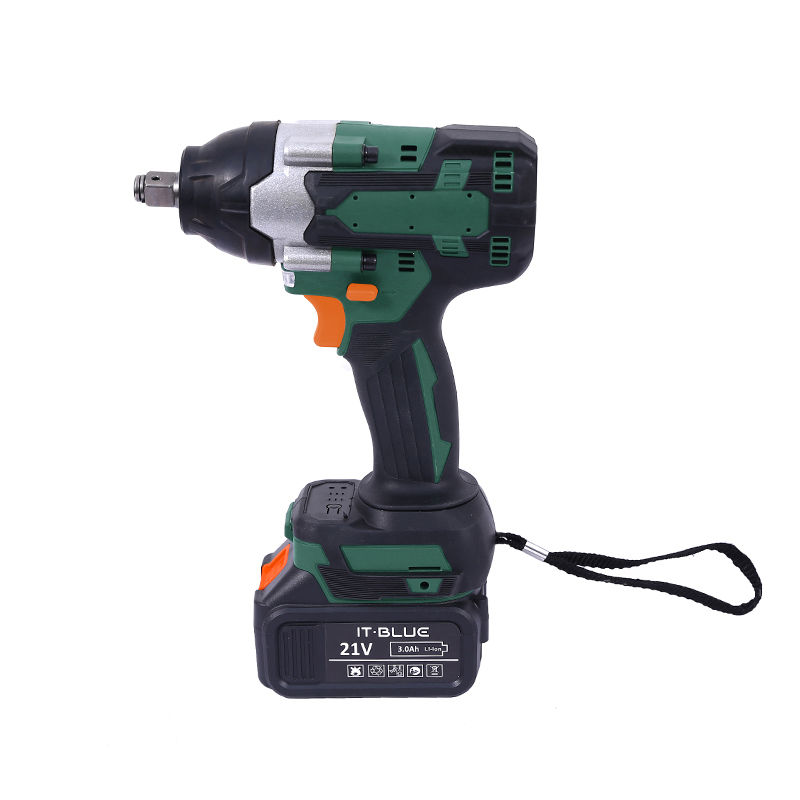
Fastening Torque and Breakaway Torque Are Different
Two torque numbers often appear on high-torque impact wrench specifications. They describe different operating conditions and should not be treated as interchangeable.
| Specification | Purpose | Typical Application |
| Fastening Torque | Force delivered while tightening a fastener | Wheel lugs, structural bolts, pipe connections |
| Breakaway Torque | Peak force available for loosening stubborn fasteners | Rusty bolts, seized nuts, heavily tightened connections |
A DEWALT 20V MAX XR 1/2-inch high-torque model, for example, lists 1,030 ft-lbs of maximum fastening torque and 1,400 ft-lbs of maximum breakaway torque. Another model reaches 1,200 ft-lbs fastening torque and 1,750 ft-lbs breakaway torque.
Higher Torque Can Become Too Much
More torque is valuable for large or heavily loaded fasteners, but excessive output can make delicate fastening harder to control. A small fastener does not necessarily need the same force required for a large structural bolt.
- Large bolts: High output helps overcome resistance during installation or removal.
- Automotive work: Strong breakaway torque can help loosen stubborn wheel and suspension fasteners.
- Light fastening: Excessive impact force may increase the risk of damaging threads or over-tightening.
- Controlled assembly: Lower speed modes can provide better handling than operating continuously at maximum output.
Torque Control Matters as Much as Output
Manufacturers are adding electronic control modes to address this issue. DEWALT's Precision Wrench mode is designed to help reduce overtightening during forward operation and fastening run-off during reverse operation. Kreg's 20V high-torque 1/2-inch wrench also uses an Assist Mode for similar control purposes.
Speed and Impact Rate Change the Tool's Character
Torque does not work alone. RPM and impacts per minute influence how the tool behaves against different loads.
| Parameter | What It Influences |
| RPM | Rotation speed during fastening and removal |
| IPM | Frequency of impact pulses |
| Torque | Rotational force available at the fastener |
| Speed Modes | Control over different fastening conditions |
| Battery Capacity | Available operating time and power delivery |
A Kreg 20V high-torque 1/2-inch impact wrench, for example, is specified at up to 2,900 RPM and 2,100 impacts per minute, with four operating modes. These specifications show why torque alone does not describe the complete working behavior of an impact wrench.
Battery Output Can Affect Real-World Performance
A cordless tool depends on its battery system to supply electrical power to the motor. Battery capacity is therefore worth examining alongside the advertised torque figure.
- Check the rated voltage, such as 18V nominal or 20V maximum.
- Consider battery capacity, especially for repeated heavy fastening.
- Check whether the manufacturer recommends a specific battery capacity for high-output operation.
- Compare tool-only specifications with kit specifications, since the battery can add considerable weight.
Some manufacturers specifically recommend higher-capacity battery packs for demanding applications. HERCULES, for example, recommends a 5Ah or larger battery for its 20V high-torque 1/2-inch impact wrench.
Does a 1/2-Inch Drive Need Maximum Torque?
The 1/2-inch square drive is widely used for automotive, construction, equipment, and structural fastening. However, not every application requires a tool exceeding 1,000 ft-lbs of torque.
A mid-range 1/2-inch impact wrench may provide around 600 ft-lbs of fastening torque and 800 ft-lbs of breakaway torque while keeping the tool below 4 lbs without its battery. That combination can be more practical for users who need substantial output without the size and weight associated with heavier high-torque models.
Match Torque to the Fastener
- Wheel lugs: Moderate to high torque with controlled output is generally useful.
- Structural fasteners: High torque and suitable impact sockets may be required.
- Pipe flanges: Strong output can help with larger threaded connections.
- Seized hardware: Breakaway torque becomes particularly important.
What Should Buyers Compare?
A sensible comparison of a High Torque 1/2 Impact Wrench should include several specifications rather than focusing on a single headline number.
- Maximum fastening torque
- Maximum breakaway or nut-busting torque
- RPM and IPM
- Number of speed or power modes
- Brushless motor configuration
- 1/2-inch anvil type
- Tool weight with and without battery
- Compatible battery capacity
More Torque Is Not the Whole Story
A High Torque 1/2 Impact Wrench has a clear advantage when large fasteners, high resistance, or stubborn hardware demand substantial rotational force. However, usable performance depends on more than peak torque. Speed control, impact rate, battery output, tool weight, and precision modes all influence how effectively that power can be applied.
The practical question is therefore not simply “How much torque does it produce?” A better comparison asks whether the available torque matches the fastener size, application, and required level of control. For demanding work, high output can provide valuable reserve power; for lighter fastening, controllability may matter just as much as raw torque.