

 English
 русский
 Español
Types of Precision Mini Drills on the Market
Precision mini drills are small, hand-held rotary tools used for drilling fine holes (0.3 mm to 3.0 mm diameter) in materials like printed circuit boards (PCBs), jewelry, dental models, plastic miniatures, and woodworking details. They differ from standard drills by having a higher speed (usually 10,000–35,000 RPM) and lower torque. The following types are distinguished by power source, speed control, and chuck mechanism.
High-speed electric mini drill (corded, variable speed). This is the most common type for hobbyists and light industrial use. It plugs into a wall outlet, operating at 12V–36V DC from a transformer or direct 110–230V AC with an internal motor. Speed range: 5,000–35,000 RPM. The motor is typically a universal motor (brushed) rated at 50–150 watts. The chuck accepts bits from 0.5 mm to 3.2 mm (1/8 inch). Pros: consistent power, no battery to charge. Cons: cord can be restrictive, and the transformer is an extra component. Brands like Dremel, Proxxon, and generic versions fall into this category. A typical unit weighs 300–500 grams.
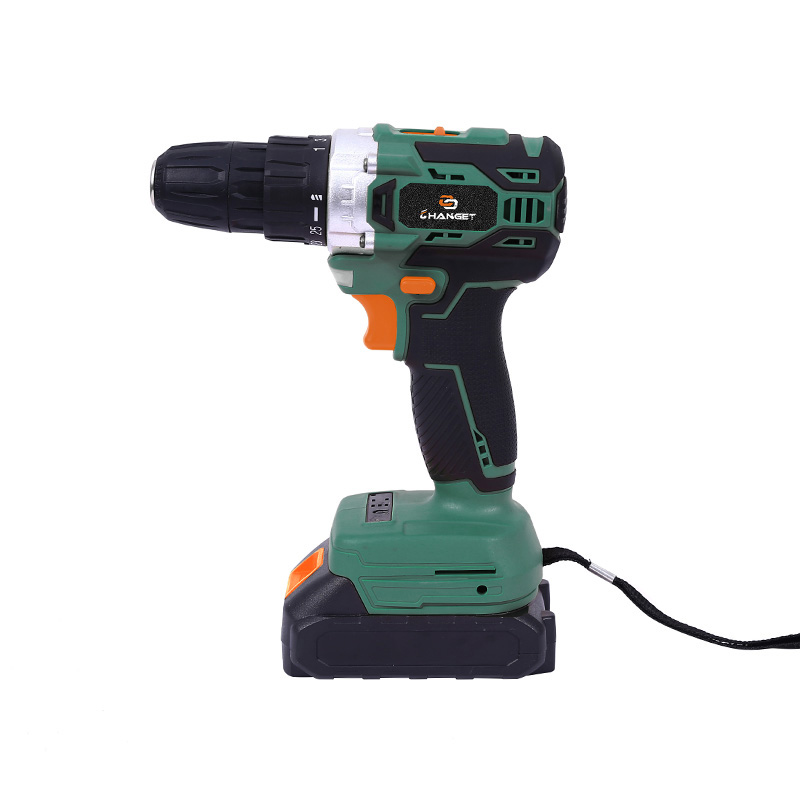
Cordless mini drill (battery-powered, often USB rechargeable). These run on lithium-ion batteries (3.7V–12V). Speeds range from 5,000–25,000 RPM, depending on voltage. The smallest models (3.7V, 5,000–10,000 RPM) are for PCB drilling and light plastic work. Larger models (8V–12V, 15,000–25,000 RPM) approach corded performance for a limited time (15–30 minutes of active use per charge). Pros: portable, no cord. Cons: battery degrades over 2–4 years, and the maximum speed is generally lower than corded. The chuck on battery models is often a simple collet (one bit size per collet) or a small three-jaw chuck. Weight: 150–300 grams.
Pencil-style mini drill (low voltage, DC, often with foot pedal). These are used in dental labs, jewelry making, and PCB prototyping. The motor is separate (a small box on the table) and connects to the handpiece through a flexible shaft. Speed range: 5,000–35,000 RPM. The handpiece is very thin (10–15 mm diameter), like a large pen, allowing precise control. The chuck is a push-button collet that accepts bits down to 0.3 mm. Pros: very low vibration, excellent for fine work. Cons: more expensive, the flexible shaft requires occasional lubrication. Examples: Foredom, Micromot (Proxxon) with flexible shaft.
Material Information for Precision Mini Drills
- Motor and Housing Materials. The outer body of a precision mini drill is usually made of glass-filled nylon or ABS plastic for economy models, while professional units use cast aluminum with a powder-coated finish. Glass-filled nylon (30–40% glass fiber) provides stiffness with moderate weight; an 80-watt drill in a nylon housing weighs about 260–320 grams. Aluminum housings weigh 340–450 grams but dissipate heat better—the surface of a nylon housing can reach 55–60°C after 10 minutes of continuous use, while an aluminum housing stays at 40–45°C. Higher heat reduces the internal motor's brush and magnet life. The fan (cooling) is integrated into the motor shaft and is typically made of polycarbonate or nylon. In corded models, the transformer (in the base unit or power supply) has a ferrite core and copper windings. Cheaper units use aluminum wire in the transformer coils; aluminum-wound transformers run 10–15°C hotter and deliver 5–10% less voltage stability.
- Chuck and Collet Materials. The part that holds the drill bit is either a three-jaw chuck (usually made of hardened steel, 45–55 HRC) or a collet system (brass or hardened steel). Three-jaw chucks for mini drills are smaller than full-size drill chucks and have less gripping force—typically 20–50 N (about 2–5 kg of holding force). They accept bit shanks of 0.5–3.5 mm. The jaws are made of chrome vanadium or high-carbon steel; after 5,000–10,000 bit changes, the jaw teeth wear, and the chuck will no longer hold small bits. Collets are simple split cylinders, usually supplied in a set (e.g., 0.5, 0.8, 1.0, 1.5, 2.0, 2.5, 3.0, 3.2 mm). Brass collets are softer and deform over time (after 2,000–3,000 insertions); steel collets (hardened to 50–55 HRC) last much longer but are more expensive. The collet nut (which tightens the collet) is often made of brass or zinc alloy. Zinc alloy nuts crack if overtightened—the typical failure mode for budget mini drills.
- Drill Bit Materials (Carbide vs. HSS). Most bits for precision mini drills are either high-speed steel (HSS) or solid carbide. HSS bits (usually 5–15% cobalt) are tougher and resist breaking when the drill wobbles. They are suitable for drilling plastic, wood, soft metals (aluminum, brass), and standard PCB substrates (FR-4 fiberglass). However, HSS dulls quickly on fiberglass—after 50–100 holes, the tip wears, requiring more pressure and risking breakage. Carbide bits (micro-grain tungsten carbide, 90–94% WC with 6–10% cobalt binder) stay sharp much longer. A carbide bit can drill 2,000–5,000 holes in FR-4 before noticeable wear. But carbide is brittle; a lateral force of 0.2–0.5 N (the weight of a coin) can snap a 0.5 mm carbide bit. The shank of most mini drill bits is 2.35 mm (3/32 inch) or 3.18 mm (1/8 inch), regardless of the cutting diameter. The flutes (helical grooves) are ground into the blank; cheap HSS bits may have flutes that are not concentric with the shank, causing the hole to be oversized by 0.1–0.2 mm.
- Bearing and Spindle Materials. The rotating spindle (the part that holds the chuck or collet) rides on bearings. Better mini drills use two or three ball bearings (usually 6000 series, steel rings with chrome steel balls). Economy drills use sleeve bearings (oil-impregnated bronze). Ball bearings give lower runout—0.02–0.05 mm at the spindle, 0.05–0.10 mm at the chuck tip. Sleeve bearings have runout of 0.10–0.25 mm. For drilling 1.0 mm holes, 0.1 mm runout is acceptable; for 0.3 mm holes, runout above 0.05 mm will break bits. The housing around the bearings is typically die-cast zinc or aluminum. Zinc housing absorbs vibration better but weighs more.