

 English
 русский
 Español
Content
The modern lithium battery brushless cordless drill is a sophisticated assembly of materials science and precision engineering. It has become an essential tool for professionals and homeowners alike, offering portability and power that were unimaginable with corded tools just a few decades ago. Behind its plastic housing lies a carefully selected combination of metals, polymers, and rare earth elements, each chosen for specific properties such as conductivity, strength, weight reduction, or thermal management.
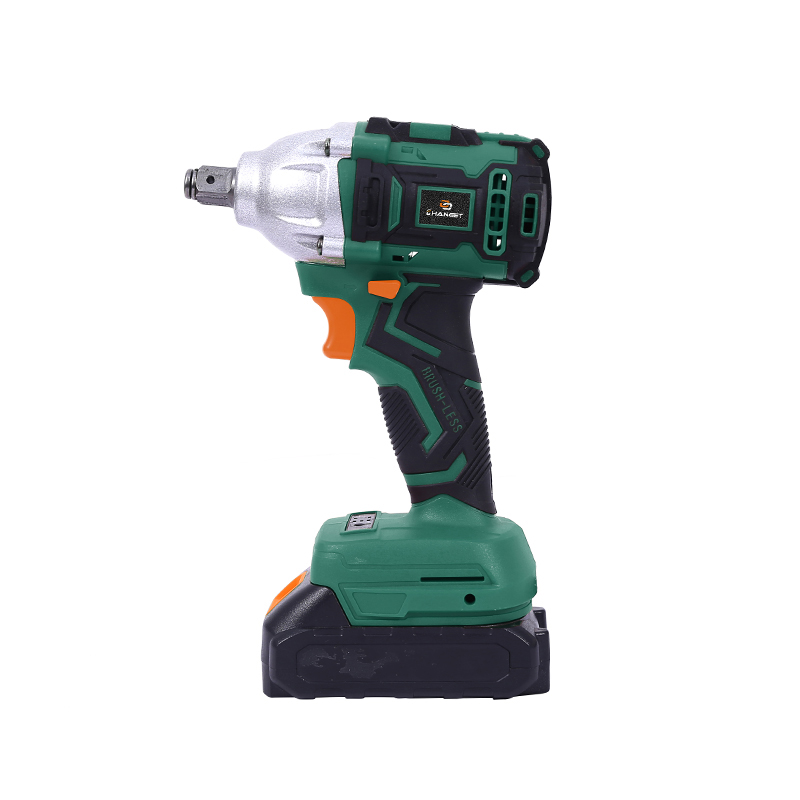
The Motor: Brushless Design and Magnetic Materials
The brushless motor is the heart of the modern cordless drill, representing a significant advancement over older brushed designs. Its construction relies heavily on specialized materials.
Rotor Magnets: Neodymium-Iron-Boron (NdFeB)
The rotor in a brushless motor contains permanent magnets. The material of choice is neodymium-iron-boron (NdFeB) , a type of rare earth magnet.
These magnets provide an exceptionally high magnetic field strength relative to their size and weight. This allows the motor to produce high torque in a compact form factor.
Neodymium magnets are brittle and susceptible to corrosion, so they are typically coated with nickel, copper, or epoxy to protect them during operation.
The mining and processing of neodymium are concentrated in specific geographic regions, which influences the supply chain and cost of these tools.
Stator Windings: Copper
The stationary part of the motor, the stator, consists of coils of wire that generate a rotating magnetic field. These coils are almost exclusively made of copper.
Copper is selected for its excellent electrical conductivity, which minimizes energy losses as heat and maximizes the efficiency of the motor.
The copper wire is coated with a thin layer of polyurethane or polyester enamel (magnet wire insulation) to prevent short circuits between adjacent windings.
Stator Laminations: Electrical Steel
The stator is not solid metal but a stack of thin laminations. These are made from electrical steel, an iron alloy containing small amounts of silicon.
The laminations are coated with an insulating layer and stacked together. This construction reduces eddy current losses, which would otherwise waste energy and generate heat in a solid metal core.
Motor Housing and Bearings
The motor components are held within a housing, often made of aluminum or magnesium alloy to dissipate heat effectively.
Rotational motion is supported by ball bearings or sleeve bearings. Ball bearings typically have steel races with steel or ceramic balls, while sleeve bearings are often made of porous bronze impregnated with oil.
The Battery Pack: Lithium-Ion Cells and Their Enclosure
The battery pack is both the power source and one of the most material-intensive components of the drill. Its construction prioritizes energy density, safety, and durability.
Lithium-Ion Cells: Cylindrical Format
Most cordless drills use cylindrical lithium-ion cells, commonly the 18650 or 21700 formats.
The positive electrode (cathode) contains lithium metal oxide compounds. Common variants include Lithium Nickel Manganese Cobalt Oxide (NMC) , which balances energy density and power delivery.
The negative electrode (anode) is typically graphite, a form of carbon that can intercalate lithium ions during charging.
The electrolyte is a lithium salt (such as LiPF6) dissolved in a mixture of organic solvents. This liquid facilitates ion movement between electrodes.
The separator between electrodes is a microporous membrane made of polyethylene or polypropylene.
Battery Housing: Impact-Resistant Plastics
The outer casing of the battery pack is molded from engineering plastics, most commonly Acrylonitrile Butadiene Styrene (ABS) or Polycarbonate (PC) blends.
These materials provide impact resistance, electrical insulation, and protection against moisture and dust ingress.
The housing also includes seals, typically made of silicone rubber or nitrile rubber, to meet ingress protection ratings.
Bus Bars and Contacts: Nickel and Copper
Within the battery pack, cells are connected using nickel-plated steel strips or pure nickel strips. Nickel resists corrosion and can be spot-welded to the cell terminals reliably.
The external contacts that connect the battery to the drill are typically copper alloys (such as brass) with gold or silver plating to ensure low resistance and corrosion resistance over many insertion cycles.
Battery Management System (BMS) Circuit Board
The BMS monitors cell voltages and temperatures. Its circuit board is made from FR4 fiberglass epoxy laminate.
Electronic components include semiconductors (silicon-based MOSFETs and integrated circuits), resistors, and capacitors mounted on the board.
The Housing and Handle: Engineering Polymers
The outer body of the drill must be lightweight, durable, and comfortable to hold. Modern drills achieve this through sophisticated polymer engineering.
Main Housing: Glass-Filled Nylon or ABS
The primary structural housing is often made from nylon (polyamide) reinforced with glass fibers. The glass fibers, typically 10% to 30% by volume, significantly increase stiffness and reduce thermal expansion.
For areas requiring high impact resistance, ABS or PC/ABS blends are used. These materials can withstand drops onto hard surfaces without cracking.
These plastics are molded around metal inserts (often brass or stainless steel) that provide threaded mounting points for screws and internal components.
Handle Overmold: Thermoplastic Elastomers (TPE)
The grip areas feature a soft-touch material overmolded onto the rigid plastic. This is typically a thermoplastic elastomer (TPE) or thermoplastic polyurethane (TPU) .
These materials provide a non-slip surface, even when hands are sweaty or the tool is used in oily environments. They also absorb some vibration from the tool.
The elastomer is chemically bonded to the rigid substrate during a two-shot molding process.
Gear Housing: Magnesium or Aluminum Alloys
On professional-grade drills, the front gearbox housing is often made of magnesium alloy or aluminum alloy.
These metals provide excellent strength and dimensional stability, which is critical for maintaining precise gear alignment under heavy loads.
They also act as a heat sink, drawing heat away from the motor and gearbox during extended use.
The Gearbox and Clutch: Steel and Powdered Metals
The mechanical components that transmit power from the motor to the chuck must withstand significant torque and repeated impact loads.
Gears: Hardened Steel and Powdered Metal
The planetary gears within the gearbox are made from hardened steel alloys, such as 4340 or 4140 steel, which are heat-treated to achieve high surface hardness while maintaining a tough core.
Some gears are manufactured through powder metallurgy, where metal powder (iron with carbon and alloying elements) is compressed in a die and then sintered in a furnace. This process creates near-net-shape parts with minimal waste.
The gear carrier plates are often sintered steel or machined aluminum.
Clutch Mechanism: Spring Steel and Case-Hardened Components
The adjustable clutch relies on a compression spring, made from spring steel wire, to apply force to the clutch plates.
The clutch teeth or detents are case-hardened to provide a wear-resistant surface while maintaining ductility in the core to prevent breakage.
The clutch adjustment ring, which the user turns to select torque settings, often incorporates acetal (polyoxymethylene) components for smooth, low-friction movement.
Spindle and Chuck: Alloy Steel
The output spindle that drives the chuck is machined from alloy steel and often splined to engage with the final stage of the gearbox.
The chuck, which holds the drill bit, is typically made of hardened steel for keyed chucks or a combination of steel and nylon for keyless chucks. The outer sleeve of a keyless chuck is often glass-filled nylon for grip and weight reduction.
Electrical Components and Wiring
Beyond the motor and battery, the drill contains various electrical components that control power delivery and provide user interface functions.
Trigger Switch and PCB
The variable-speed trigger contains conductive plastic elements or carbon contacts that vary resistance as the trigger is depressed.
The trigger assembly includes copper lead frames and silver-alloy contacts to handle the high currents flowing through the switch.
The circuit board within the trigger or separate control module uses FR4 substrate with surface-mount components including MOSFETs (typically silicon-based) for motor control.
Wiring: Stranded Copper with Insulation
Internal wiring uses stranded copper wire for flexibility and resistance to vibration fatigue.
Insulation materials include cross-linked polyethylene (XLPE) , polyvinyl chloride (PVC) , and silicone rubber for high-temperature areas.
Wire gauges are selected based on current-carrying requirements, with thicker wires (lower gauge numbers) used for high-current paths between battery and motor.
LED Work Light
Many drills include an LED work light. The LED itself is a semiconductor chip, typically gallium nitride (GaN) on a sapphire or silicon substrate.
The LED is encapsulated in epoxy resin, which may contain phosphor to convert blue light to white light.